Upcoming Education Opportunities
Winter Lunch and Learn
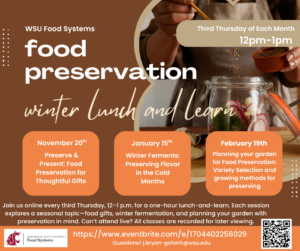
Bring your lunch and join us online for a seasonal learning series in food preservation! This short “lunch and learn” program meets on the third Thursday of each month from 12–1 p.m., with each class focusing on a timely topic: making delicious food gifts, exploring winter fermentation, and planning your garden with preservation in mind. Classes are taught by Jennie Bryan-Goforth, WSU Food Preservation Instructor, a longtime food preserver and organic farmer who brings both expertise and hands-on experience to every session. All classes are recorded for later viewing, and participants receive access to a comprehensive online collection of WSU publications, recipes, and materials to support safe, creative preservation at home. Learn more and register here. We do have some need based scholarship options, feel free to reach out to j.bryan-goforth@wsu.edu for more information.
November 20th noon-1pm: Preserve & Present: Food Preservation for Thoughtful Gifts. Holiday jams, marmalades, fermented hot sauce, infused vinegars, and much more.
January 15th noon-1pm: Winter Ferments: Preserving Flavor in the Cold Months. Learn all about foods and techniques for success with winter fermentation.
February 19th noon-1pm: Planning your garden for Food Preservation: Variety Selection and growing methods for preserving. Gardening can be more than just enjoying fresh produce–with the correct variety selection and growing methods, you can improve your bulk harvests and preservation practices, and enjoy your harvest year round!
2026 Grow Your Groceries Cohort
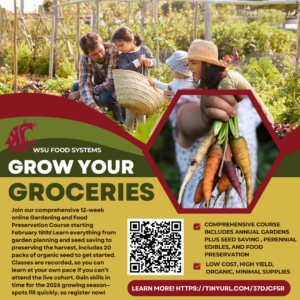
The 12-week Grow Your Groceries course begins February 18, 2026 and offers a comprehensive, low-cost approach to home food production and preservation. Starting with six classes on annual food production including garden planning, soil health, planting, and crop care, the program progresses to perennials and seed saving, and concludes with four sessions on preserving the harvest through canning, fermentation, freezing, drying, and storage. Designed as a supportive cohort, the course emphasizes organic, low cost, low labor, high yield, regenerative practices and includes 20 packs of organic seed with enrollment. Classes are held online via Zoom, recorded for flexibility, and supported by extensive resources on Google Classroom. Learn more and register here.
We do have some scholarship options, such as need based, educators, and tribal communities–feel free to reach out to j.bryan-goforth@wsu.edu for more information.
Preserve Washington Crop Sheet Series
The Crop Sheet publication series highlights Washington-grown fruits and vegetables with easy, approachable preservation guidance. Each sheet begins with nutrition, selection tips, short-term storage, and volume information, followed by simple step-by-step instructions and recipes for freezing, drying, and water bath canning. Designed to spark interest in preserving food, the recipes focus on the most popular, beginner-friendly methods. Crop Sheets are also a valuable tool for farmers—whether printed or shared via QR code, they can help increase bulk sales at farmers markets and support CSA customers in making the most of seasonal abundance all year long.
Publications and Resources
WSU Food Preservation Publications
National Center for Home Food Preservation
WSU Food Systems Food Preservation group on Facebook
This group is a community for learning and sharing safe, research-based food preservation methods, moderated by WSU Educator Jennie Bryan-Goforth. Members are encouraged to post questions, share resources, and use the group’s searchable archive as a database to find answers, tested recipes, and guidance from trusted sources like universities, USDA, and approved manufacturers.